


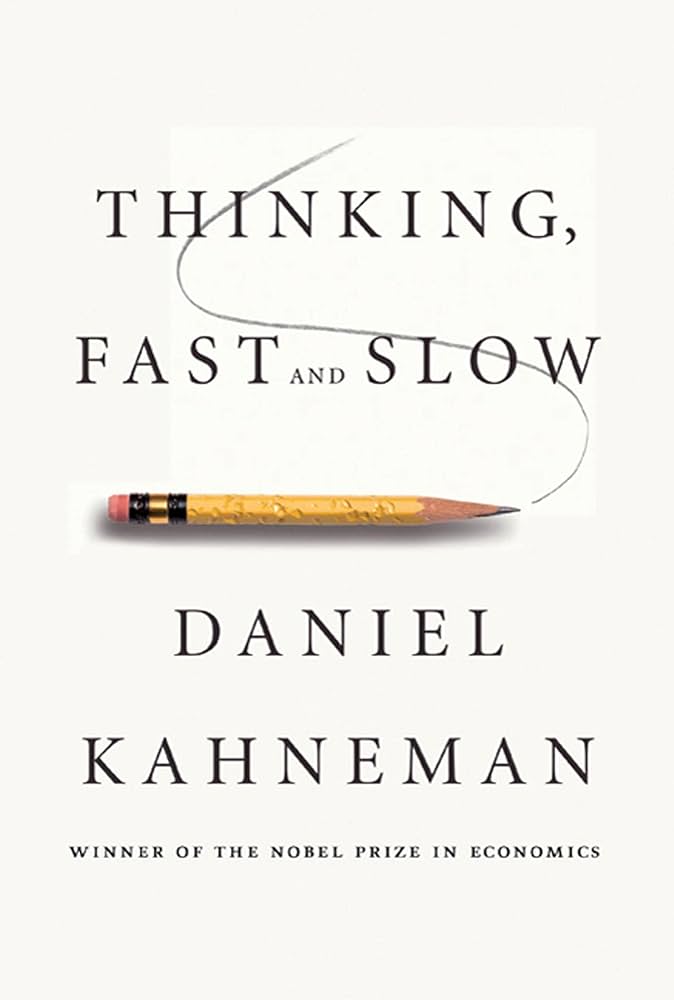
In "Thinking, Fast and Slow," Daniel Kahneman distills decades of research into a sweeping account of how the mind works. He identifies two systems: System 1 operates automatically and quickly, generating intuitions, emotions, and snap judgments, while System 2 handles slower, effortful, analytical thinking. Though we believe we're rational, System 1 dominates, leaving us prone to predictable biases: anchoring, availability, overconfidence, loss aversion, and framing effects. Kahneman explores how these shortcuts shape choices in business, medicine, politics, and personal life, often leading us astray. Blending behavioral economics with psychology, the book offers tools to recognize flawed thinking and make wiser, more deliberate decisions.

“It is probably the most impactful book I've ever read. It really helped me understand how to work with others: not just operate and communicate from my perspective and with my bias, but also perceive how others might come to this conversation with their perspective, with their bias, and adapt myself to the situation."